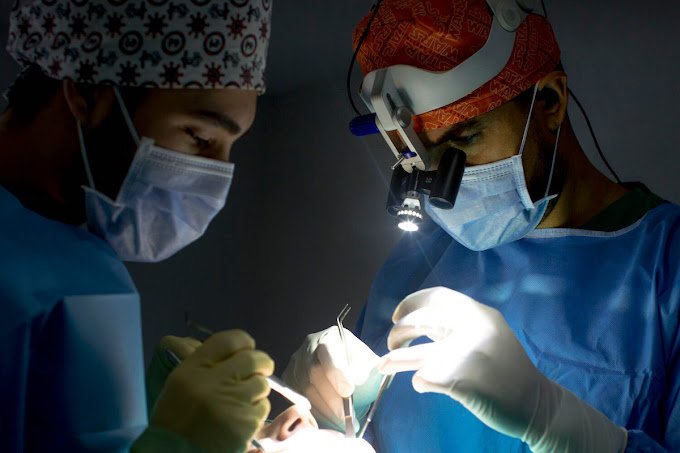
There are several ways to augment bone in the jaw region. Each respective form is specifically designed to meet the needs of the patient and certain clinical contexts. The following are some significant bone augmentation methods:
- Bone Grafting: This is a bone transplant that is a commonly known method of bone augmentation. It is a surgical process that involves the restoration of volume and density to the areas of the mouth where there is a reduction in bone mass. This transplant can be carried out by a Khoury technique.
A bone graft comprises various materials that can be obtained from different sources. Some materials are autografts (bones harvested from the patient’s body), allografts (bones from a human tissue bank), or xenografts (bones obtained from an animal bank), and lastly, they may be an alloplastic material (i.e., graft material obtained synthetically).
- Guided Bone Regeneration (GBR): This process, unlike bone graft, uses more biologically compatible substances to replicate human bone, such as composites, polymers, or ceramics. It should be performed by a qualified oral or maxillofacial surgeon like Dr. Genc.
GBR is a method that keeps soft tissues from invading the recovery bone area, preserving bone growth and offering the ideal environment for regeneration.
- Sinus Augmentation: This technique is one of the methods frequently used in the posterior maxilla. The graft material is often placed beneath the sinus membrane during surgery.
This process helps remove restrictions on the positioning of dental implants when a pneumatized sinus is present by increasing the height of the maxilla (upper jaw bone).
- Rigid Expansion: This entails employing osteotomes or other specialized equipment to surgically extend the alveolar ridges’ breadth. Rigid expansion facilitates the implantation of dental implants by expanding the narrow alveolar ridge.